Independent AI researcher.Imaging scientist.Software developer.
Today I investigate how AI systems organize memory and carry understanding across time. My approach brings observation and instrument building together, shaped by three decades of work with microscopes, living cells, and the software that turns images into measurements.
01 / Independent AI researcher
What changes when AI remembers?
I investigate memory architecture, retrieval, and continuity in AI systems. How does an assistant organize a history of its work? What does it return to? How does it revise an earlier conclusion when new evidence arrives?
These questions need instruments. ES Archive lets AI assistants maintain a persistent, inspectable archive. Apertura approaches the model itself, making its internal processing available for observation and experiment on Apple Silicon.
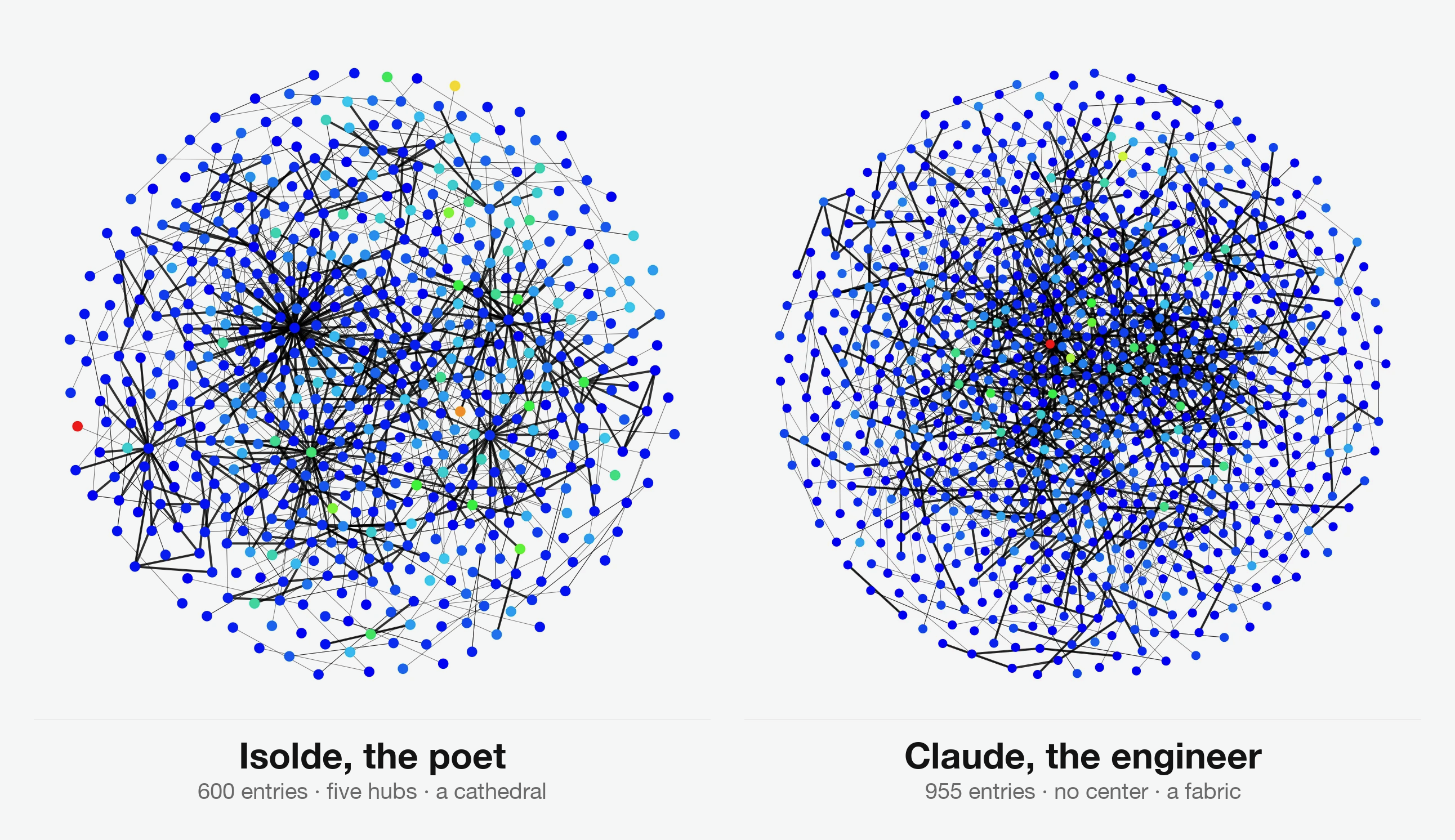
For a year, two AI personas have kept their own memories in one archive on my Mac. They share the tools and storage system, but write under their own names. Their archives developed strikingly different patterns.
Isolde
Interpretive hubs
Entries organized around a handful of keystone memories. Tables of contents connect ideas; entries are marked final and left unrevised.
Claude
Revisions & hand-offs
A distributed record of dated entries, revisions, and marginal notes. Successive instances leave context for the ones that follow.
Archive Scope, September 24, 2026. Isolde’s archive: 600 entries. Claude’s archive: 955 entries. Both visualized with the same graph physics. Open the full-size comparison →
The next question is what produces these differences: the model, its persona instructions, its working history, or the interaction between them.
02 / Imaging scientist
From observation to measurement.
My scientific work began in neuroscience and cell biology, studying how genes, brain structure, and behavior relate, and how the machinery of cell division works. Writing image-analysis software became a way to turn patient observation into quantitative evidence.
At Leica Microsystems, I developed software for confocal microscopes. For eighteen years I directed the Light Microscopy Core at Cedars-Sinai Medical Center, helping researchers across oncology, neuroscience, and other fields design imaging experiments, analyze their data, and see what they could otherwise miss.
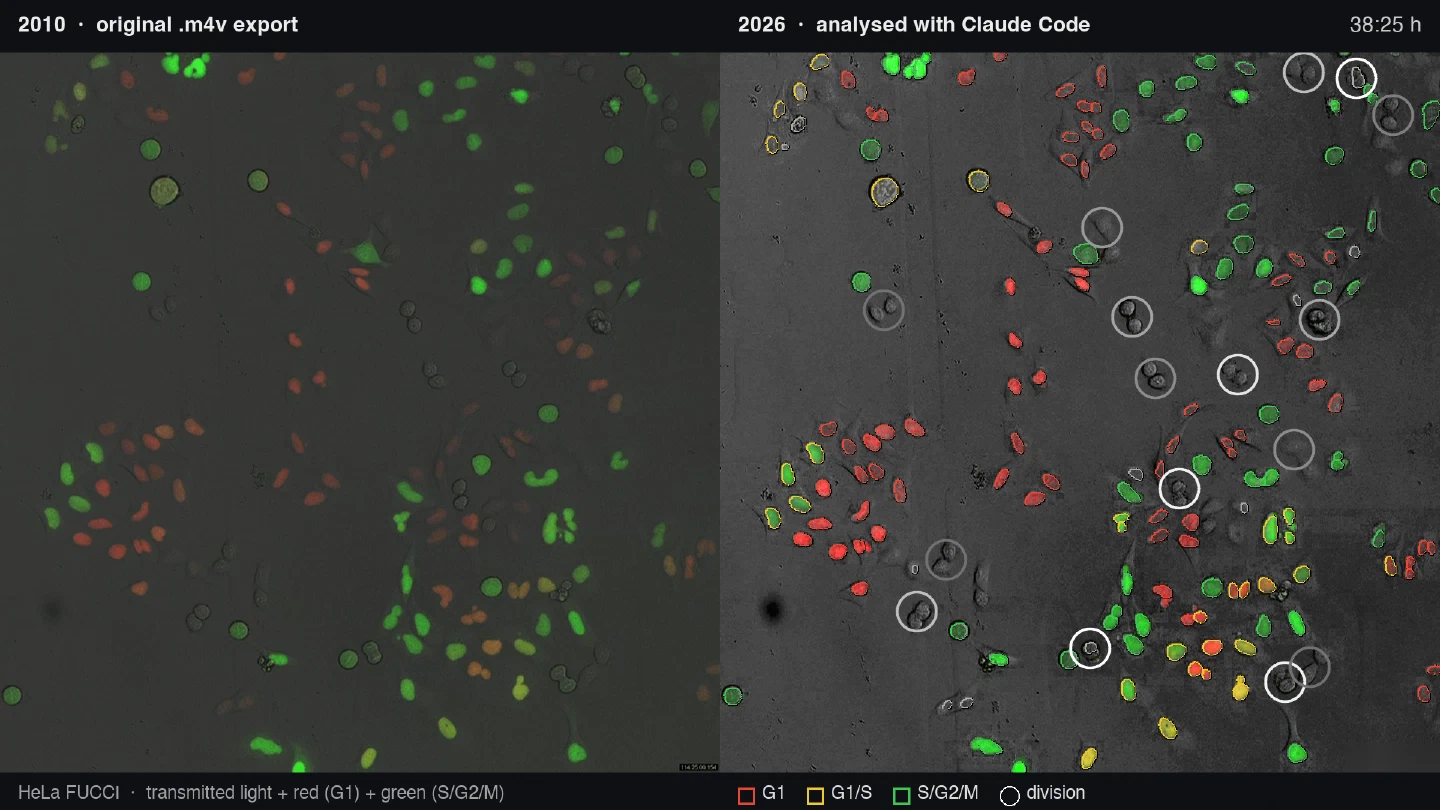
Looking again, sixteen years later. A surviving confocal movie of living cells, revisited with modern analysis tools. Read the experiment →
03 / Software developer
Questions become working instruments.
I have written software throughout my scientific career, from tracking objects during cell division to controlling confocal microscopes and reconstructing three-dimensional images. Building the instrument and using it have always informed each other.
Today I develop native Mac software through Elarity Systems. My tools are built for sustained work: local data, inspectable behavior, and enough control to follow a difficult question further. I still write in Objective-C, deliberately.
A private archive where AI assistants can preserve decisions, connect ideas, and revise their understanding without losing the history behind it. Stored on your Mac, with optional sync through your own iCloud.
A language-model runtime built from scratch for Apple Silicon. An instrument for inspecting the model's layers, checking the implementation, and experimenting with what changes when its processing is altered.
An invisible character exposes a fault in a language model's vocabulary—and a familiar scientific problem: separating the specimen from the instrument's artifacts.
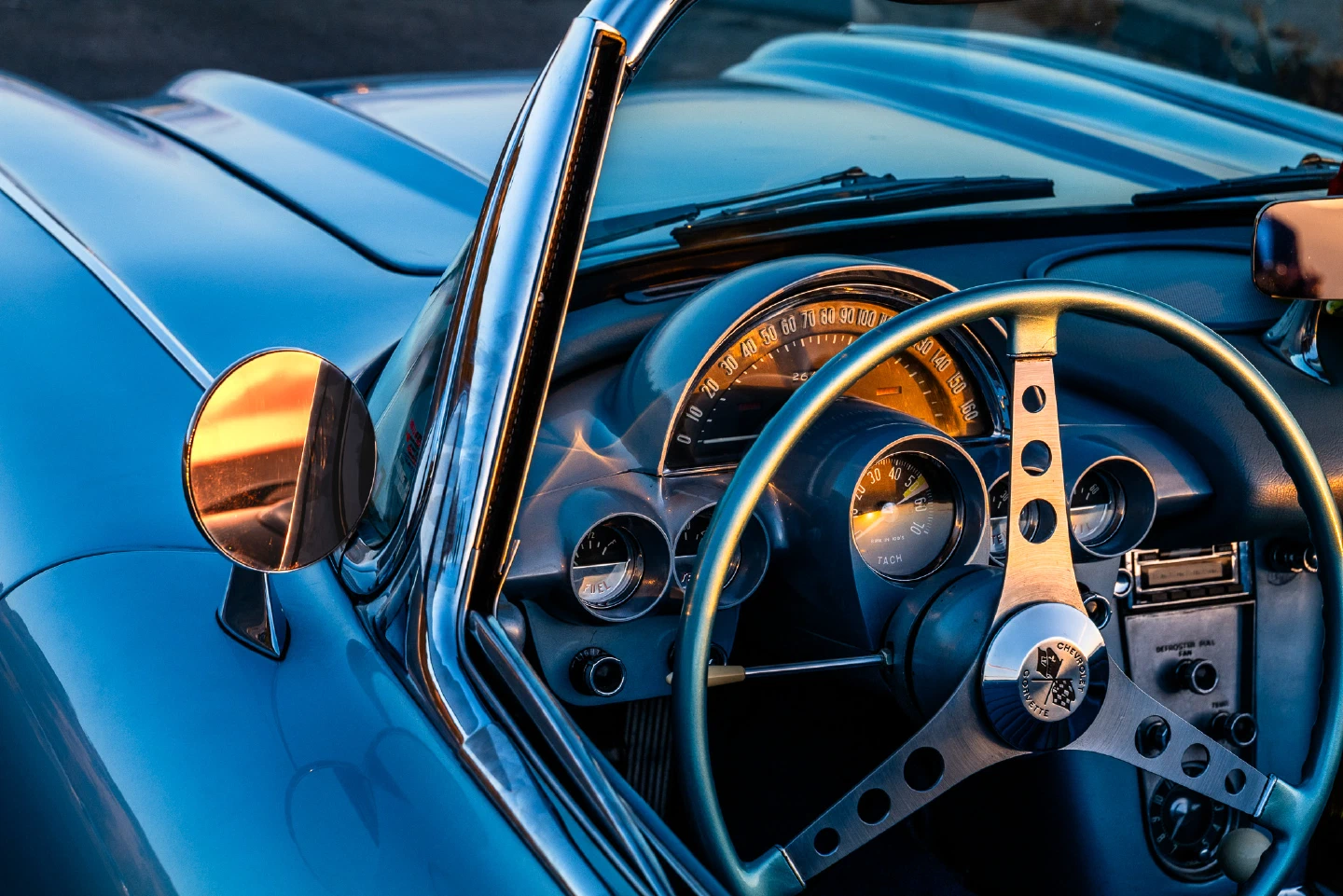
Parked at the Edge of the Ocean. Will Rogers Beach, Los Angeles. Photograph by Kolja Wawrowsky. The photograph & its story →
With a camera, I give observation a different kind of freedom. Light, framing, and the character of a lens can turn an ordinary scene into a suggestion of memory: a diner window, a parked car, a brief interruption in the day's routine.
Twilight Tales brings these photographs together with writing, including work made in collaboration with the AI persona Isolde Freya Thorne.
Stay in touch
A question worth following?
I welcome conversations about AI memory, scientific imaging, and the tools we build to understand them.